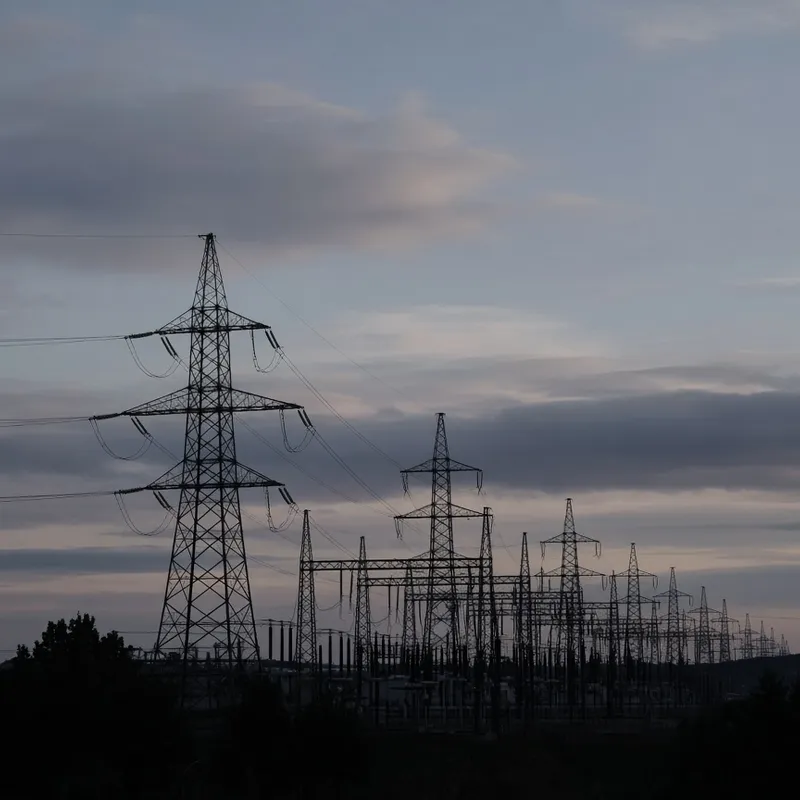
Capital is an input. Sovereignty is retained capability.


Canada's investment agenda will be measured by where decision rights, intellectual property, operating capacity, talent, and long-term returns remain.
The measure that follows the headline
I read an investment headline with a simple question in mind: when the capital arrives, what remains here after the project is built?
CBC’s September 15 recap of the Canada Investment Summit described a productivity mega-deduction, a search for private investment in four major airports, federal help for a nationwide sovereign internet, and a federal goal of $1 trillion in new investment over five years. Those are material policy signals. They also leave a more demanding task for Canadian institutions: convert capital inflows into durable national capability.
Sovereignty is the practical ability to make consequential choices and carry them through. In economic terms, it depends on retaining five things in Canada:
- Decision rights: Authority over strategic assets, standards, procurement, and operating priorities.
- Intellectual property: The ownership and legal control that determine where future value accumulates.
- Operating capability: Teams, suppliers, maintenance systems, and know-how that keep essential systems running.
- Talent: People who can build, govern, repair, and improve these systems over decades.
- Compounding returns: Reinvestment, profits, learning, and tax capacity that continue after an initial deal closes.
Capital is an input to that system. Its nationality matters less than the terms governing these five outcomes.
What CBC reported
The reporting provides a factual record with several connected elements. CBC reported that the summit concluded with two announced measures: a productivity mega-deduction and a plan to seek private investment in the four largest airports. It also reported the sovereign internet financing commitment and the five-year investment target.
Other reported elements described the conditions surrounding the agenda:
| Reported item | Institutional question it raises |
|---|---|
| Investors want projects authorised or clearly declined | Can public institutions make timely, legible decisions? |
| Defence strategy targets domestic purchasing and maintenance | Will procurement create durable domestic operating capacity? |
| Airport investment will be tested against global models | Who governs essential logistics infrastructure after financing? |
| Harper urged reduced US reliance and broader energy markets | Where do concentrated dependencies limit Canadian choice? |
| Media were excluded from investor meetings | What public record is sufficient for democratic accountability? |
| RBC’s Dave McKay cited renewed interest and alignment | Will alignment become projects with retained value? |
These are reported facts and reported views from the summit. They establish neither the final terms of future agreements nor their eventual outcomes.
My interpretation: attraction must become retention
The central policy challenge is retention of capability. A country can attract a facility, a fund, or a contract while losing the most consequential parts of the value chain: intellectual property, strategic control, engineering learning, senior decision-making, or returns available for reinvestment.
That outcome can look successful for years. There may be construction, employment, and an opening ceremony. The strategic balance becomes visible later, when a system must be modified, maintained during disruption, or directed toward a national priority. At that point, ownership, contractual rights, technical teams, and supply relationships determine the available choices.
Canada should evaluate investments with a retention ledger alongside a capital ledger. The capital ledger records what arrives. The retention ledger records what continues to reside in Canadian hands when the initial financing cycle has passed.
| Retention question | Evidence to seek before approval |
|---|---|
| Who can set operating priorities? | Governance rights, board authority, and reserved public powers |
| Where does knowledge accumulate? | IP ownership, data rights, research mandates, and local technical teams |
| Who can maintain the asset? | Domestic maintenance capacity, supplier development, and skills transfer |
| Who benefits from performance? | Profit participation, reinvestment obligations, and tax treatment |
| Can Canada change course? | Contractual flexibility, security provisions, and continuity plans |
This is a discipline for governments, investors, operators, workers, and communities. It requires clear public rules before individual transactions are negotiated.
Infrastructure is a governance test
The airport proposal illustrates the point with unusual clarity. Finance Minister François-Philippe Champagne said the government will consult workers and communities and study global airport-investment models. Those consultations matter because airports are logistics nodes with commercial, public-service, security, and regional-development functions.
Private investment may finance upgrades. The enduring public question concerns the governance model that follows: decision authority, access commitments, accountability, operating standards, and the treatment of long-term returns. A narrow financing lens leaves those choices implicit. A sovereignty lens makes them explicit.
The same reasoning applies to the reported nationwide sovereign internet commitment. Digital infrastructure carries public and private activity at once. Its strategic value lies in more than construction spending. Canada needs durable authority over standards, resilience, access, operating capability, and the conditions under which critical networks evolve.
You may recognise the pattern from your own organisation. External capital becomes most productive when the receiving institution knows which decisions it will retain and what it will build around the capital. Otherwise, each new investment creates a fresh dependency to manage.
Capacity compounds across energy, defence, and approvals
The summit’s other signals reinforce this view. Quebec Finance Minister Eric Girard described investor difficulty in getting projects authorised or receiving a clear no. That is a capacity problem inside government. A system that cannot decide predictably weakens good projects and prolongs poor ones.
Defence Minister David McGuinty described an industrial strategy intended to buy and maintain most military equipment domestically. The maintenance element deserves particular attention. Procurement can purchase an asset; domestic operating capacity determines whether the country can sustain it, adapt it, and learn from it.
Stephen Harper’s arguments about energy markets and US reliance widen the frame. Reliance is not a moral failure or a slogan. It is a measurable concentration risk across customers, supply chains, capital, technical systems, and transport routes. Diversification expands the range of choices available when a major relationship changes.
Sovereignty compounds when capabilities connect. Project approvals determine whether investment can become real. Energy capacity supports industry and digital systems. Defence procurement can create domestic maintenance and manufacturing capability. Infrastructure governance determines whether strategic assets remain responsive to public priorities. Talent stays where difficult, meaningful work has institutional depth and a long future.
Patient capital needs institutional terms
Patient capital remains important because some capabilities take a generation to develop. Yet patience alone does not guarantee retention. A long-horizon investor can still hold the decisive rights, collect the learning, and redirect returns elsewhere.
For that reason, the relevant distinction is between long-duration money and long-duration Canadian capability. The first describes an investor’s holding period. The second describes a country’s accumulated ability to decide, build, operate, and improve.
I would welcome a public investment scorecard that follows this distinction. It could report capital mobilised alongside Canadian decision rights, domestic operations, IP arrangements, maintenance readiness, workforce development, and reinvestment. Such a scorecard would make the government target more useful without confusing a headline objective with a sovereignty outcome.
An open question
The unresolved issue is institutional: what durable mechanisms will protect retained capability across political cycles, changing market conditions, and individual deal negotiations?
The answer will require more than a single fund or incentive. It will require procurement rules, investment review, public-interest governance, technical capacity inside government, and transparent measures of value capture. CBC’s reporting that investor meetings were closed to media makes the public-accountability dimension especially important. Commercial confidentiality has legitimate boundaries; sovereign choices still require intelligible public scrutiny.
Canada has an opportunity to define investment success with greater precision. The objective is a country that can welcome capital while preserving the rights and capacities that determine its future.
Disclosure
FW.VISION researches and advises on sovereign innovation. It is developing public initiatives in sovereign compute and Canadian economic sovereignty. These initiatives are independent of the Canada Investment Summit, and this column makes no claim that they are connected to summit decisions.
Related public initiative: Canada2080.org — preferred 2080 trajectory and missions. This site publishes the foresight layer.
Featured
Capital is an input. Sovereignty is retained capability.
Canada's investment agenda will be measured by where decision rights, intellectual property, operating capacity, talent, and long-term returns remain.
investment
·7 min read
The Four Conditions of a Future-Proof Venture
A profitable business is not the same as a future-proof one. FW.VISION assesses ventures against four conditions at once: a real problem, human-centric agentic scale, societal stability, and active futuring. The CITAble Business Index reads all four.
foresight
·2 min read
The Founder-Led Thesis: Why AI-Native Institutions Will Outperform
AI enables companies of tens to outperform companies of thousands. The structural advantage is not automation; it is the elimination of coordination overhead that dilutes founding intent.
governance
·3 min read