Sovereign Innovation: Canada's Position in the AI Infrastructure Race


Canada possesses structural advantages in the AI sovereignty race that most policy frameworks overlook: abundant clean energy, geographic distribution, and a regulatory environment designed for institutional trust.
The global conversation about AI sovereignty focuses overwhelmingly on compute hardware and model training capability. This framing privileges nations with semiconductor manufacturing (Taiwan, South Korea) and hyperscale data centre operators (United States). Canada appears as a secondary player in this frame.
The frame is incomplete. Sovereignty in AI is not reducible to chip fabrication. It encompasses energy supply for inference at scale, regulatory architecture for institutional trust, geographic advantages for distributed compute, and educational infrastructure for workforce transition.
Canada’s Structural Advantages
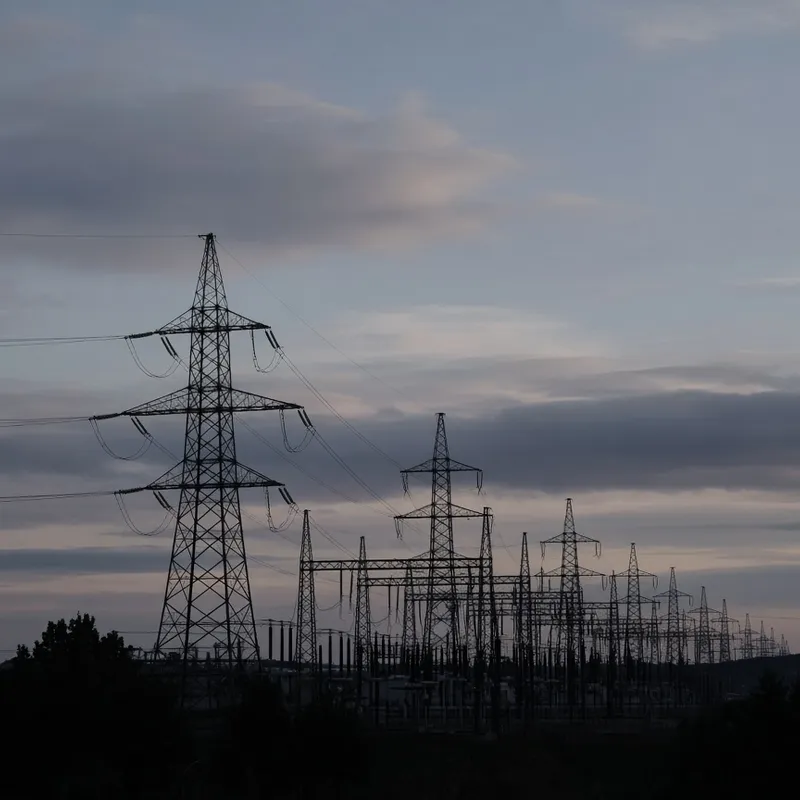
Clean energy abundance. AI inference at scale is fundamentally an energy problem. Canada possesses hydroelectric capacity that most nations cannot replicate: Quebec alone produces more clean energy than many European nations consume. This is not a future aspiration. It is existing infrastructure available for sovereign AI deployment.
Geographic distribution. Canada’s land mass enables distributed data centre placement with natural cooling advantages and geographic separation for resilience. A network of inference clusters across provinces provides redundancy that concentrated coastal deployments cannot match.
Regulatory design for trust. Canada’s approach to AI regulation (AIDA, provincial privacy frameworks) prioritises institutional accountability. For strategic funds and governance-critical applications, this regulatory environment produces a trust premium that permissive jurisdictions cannot replicate.
Educational infrastructure. The co-operative education model (University of Waterloo and its derivatives) produces practitioners who integrate academic knowledge with industrial application. This model is directly adaptable to AI-native workforce development.
The Policy Gap
Current Canadian AI policy treats the sector as a research funding problem. IRAP grants, NRC collaborations, and CIFAR fellowships support fundamental research. The gap is in institutional deployment infrastructure: the systems that translate research capability into sovereign operational capacity.
What Canada lacks is not talent or energy or regulatory sophistication. It lacks institutional foresight architecture: the governance frameworks that connect existing advantages into a coherent sovereignty strategy operating on a 25-50 year horizon rather than 4-year electoral cycles.
Implications for Strategic Actors
Fund managers evaluating Canadian AI infrastructure should assess energy access agreements, provincial regulatory frameworks, and educational pipeline capacity rather than focusing solely on model training announcements. The structural advantages compound over decades. The first-mover advantage in sovereign AI infrastructure accrues to those who secure energy contracts and regulatory positioning now.
Featured
Capital is an input. Sovereignty is retained capability.
Canada's investment agenda will be measured by where decision rights, intellectual property, operating capacity, talent, and long-term returns remain.
investment
·7 min read
The Four Conditions of a Future-Proof Venture
A profitable business is not the same as a future-proof one. FW.VISION assesses ventures against four conditions at once: a real problem, human-centric agentic scale, societal stability, and active futuring. The CITAble Business Index reads all four.
foresight
·2 min read
The Founder-Led Thesis: Why AI-Native Institutions Will Outperform
AI enables companies of tens to outperform companies of thousands. The structural advantage is not automation; it is the elimination of coordination overhead that dilutes founding intent.
governance
·3 min read